Table of Content
- Average House Price to Average Income Ratio (UK)
- To stay tuned with real estate updates
- Other statistics on the topicGlobal housing market
- Comparing Two Home Price Booms, Fifteen Years Apart
- Best Hong Leong Finance Home Loans
- The Northeast: Home prices are slowly coming back down to earth
- Figure 1. Home Price-to-income Ratios, 1980-2017 (Interactive)
- In having affordable homes, do not spend more than 30-40 per cent of your income on housing costs
Homeowners in 24 of the 30 largest metros covered by Zillow were paying more for homes in the fourth quarter of 2012 relative to their region’s median income than they were from 1985 through 1999. Let's look at three major Midwest metropolitan areas, St. Louis, MO, Des Moines, IA, and Cincinnati, OH, to see why the Midwest is so affordable. In 2017, the price-to-income ratio was 2.8 for St. Louis, and 2.7 for Des Moines and Cincinnati, inline with other healthy housing markets. However, this decrease over the last few years does not seem to be the trend in all coastal metros. In Boston, home prices increased by 24% between 2010 and 2017, after dropping by 25% during the financial crisis, and median home prices increased 228% since 1960.
Today, it’s not uncommon to hear of people offering far more than the seller’s asking price — with some even offering $1 million more than the listing price. Although the overall picture is somewhat gloomy, housing affordability has been distributed a lot like wage growth — unevenly, in both an individual and a geographical sense. Owning a home on the coasts is tough for anyone who doesn’t bring in a high income, but there are still pockets of affordability in the middle of the country, for buyers willing to chase value.
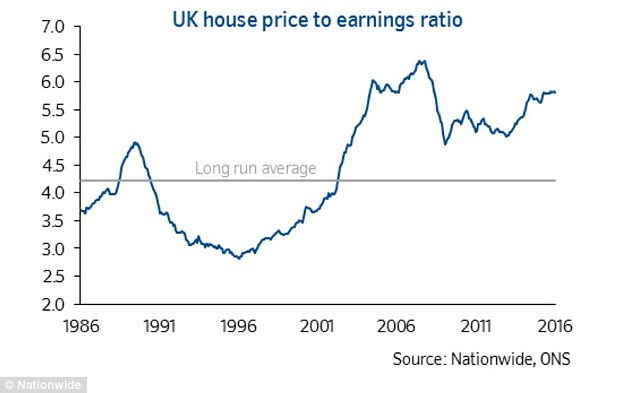
Average House Price to Average Income Ratio (UK)
To determine how the cost and affordability of housing changed over time, we gathered data on median home values, median gross rent , and median household income . We indexed each measure to 1960 values and compared how these measures changed from 1960 to 2017. We adjusted all of our measures for 2017 inflation, and compared these measures on national, regional, and metropolitan-level for selected areas. The Midwest represents the only remaining region in the US where the median borrower doesn't need to suffer a serious financial burden. Even in 2017, the overall price-to-income ratio in the Midwest was 2.9, relative to a ratio of 4.2 averaged across the other three regions. Looking at the growth rate over time, we find that while median home prices increased by 82% in the Midwest since the 1960s, median household income increased by 29% since the 1960s.
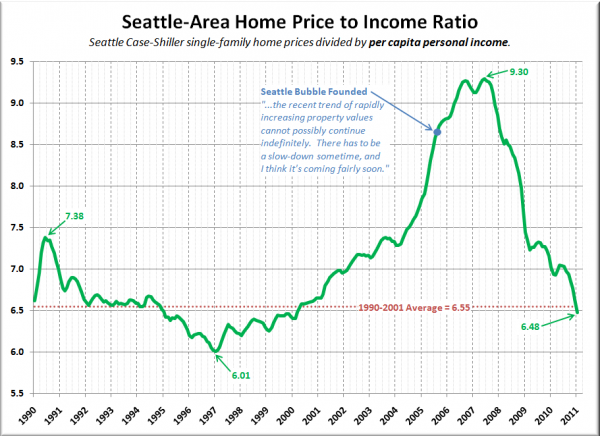
Pundits have blamed lower marriage rates, lifestyle choices , student debt, and the supposed laziness of young people for this decrease, but there’s a much simpler explanation. As high as they are today, price-to-income ratios are still below the all-time highs seen during last decade’s housing boom . In fact, price-to-income ratios nationally were remarkably stable between 1980 and 1999, when they fluctuated between 3.1 and 3.4.
To stay tuned with real estate updates
As home prices soar in 2021, many comparisons are being made between the current housing environment and the one in 2006. However, despite recent double-digit home price appreciation, the mortgage payment to purchase a home is substantially more affordable than it was 15 years ago. As a general rule of thumb, housing experts advise that homeowners or tenants should not spend more than per cent of their gross monthly income on housing costs. This is so that individuals can afford basic necessities like food, healthcare, and transportation each month while being able to set aside some personal savings.
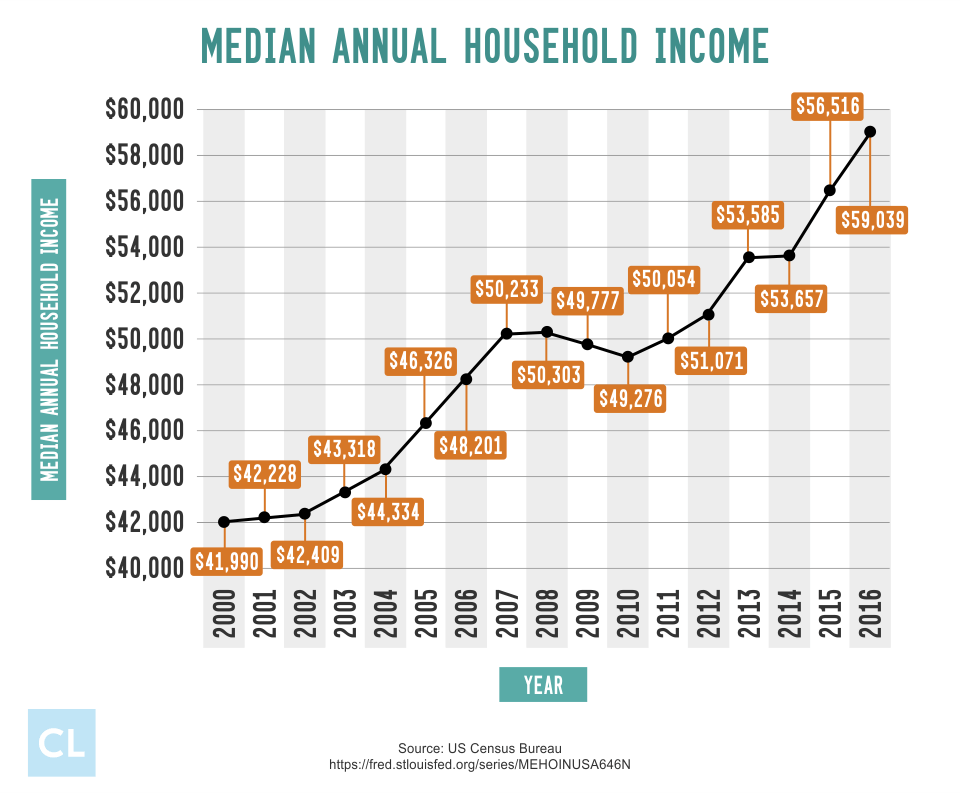
It appears the American Dream of homeownership is dead in many parts of the West. Get the latest real estate news and tips with our free weekly newsletter. Clever’s Concierge Team can help you compare local agents and negotiate better rates. While home prices have more than doubled over the past half-century, wages have been more or less flat. This trend is making things increasingly tough — and maybe impossible — for buyers.
Other statistics on the topicGlobal housing market
In 2017, the price-to-income ratio was 5.4 for Seattle and 5.1 for Denver. Whether it's a house with a white picket fence in the suburbs or a high-rise apartment in the heart of a vibrant city, owning property is considered part of the “American Dream” by the vast majority of Americans. However, for many Americans, that dream has become a nightmare because of ever-increasing home prices and stagnant wages. Economists use PTI to describe the relationship of a homeowner’s income to how much of that income they’ll be paying for their home.
Browse through more than 121,000 verified real estate properties with accurate lowdown on amenities, neighborhoods and cities, and genuine pictures. Buying a home is an important investment - turn it into your safest, best deal at PropTiger.com. The concept of price-to-income ratio is used to measure the affordability of homes in a certain area. When banks and financial institutions extent home loans, they consider the price-to-income ratio to assess how affordable it is to the home loan seeker. It is especially used to measure the long-term affordability of homes in a region.
Comparing Two Home Price Booms, Fifteen Years Apart
What is important is to ensure that your budget works for you and to ensure that you spend appropriately on housing while having enough to meet your other primary necessities. These homeowners, however, should be warned not to forget the total cost of homeownership when drawing up their budget. Tenants may also like to consider moving in with roommates to halve their housing costs. Further, tenants could consider downsizing to slash the housing costs they have to fork out their hard-earned money for each month. The DSR measurement takes into account interest payments, which the Home Price to Income ratio does not. In some leading international cities, such as Hong Kong or London, the Home Price to Income ratio could be quite high, with some sources putting the Home Price to Income ratio for Hong Kong in the double digits.
However, home prices increased 531% since 1960, reserving homeownership for the hyper-rich, despite the financial growth of the metro. For context, the median home price in 1960 adjusted for 2017 inflation was $134,713, whereas in 2017, the median home price was $849,500. The affordability index measures the percentage of a homeowner's monthly income devoted to housing payments.
Hearst Newspapers participates in various affiliate marketing programs, which means we may get paid commissions on editorially chosen products purchased through our links to retailer sites. CoreLogic tracks construction cost for commercial, residential and agricultural construction of all types of goods throughout the United States and Canada. Downsizing to a median 2-room flat in Bukit Merah and Queenstown is respectively 23 per cent and 32 per cent less expensive than a median 3-room apartment in the same regions. Members of the Benjamin Moore® National Accounts Partnership Program receive online access to all products at consistent, negotiated pricing. Save on full-service construction equipment and tool rental at all 600+ Sunbelt locations. Home Depot Pro Specialty Trades receive wholesale and volume-based pricing on professional-grade products and business solutions.
Connect with top-rated agents near you and save thousands on commission fees. As a result, we advise caution when comparing national to metro statistics from these analyses. The Harvard Joint Center for Housing Studies advances understanding of housing issues and informs policy. Through its research, education, and public outreach programs, the Center helps leaders in government, business, and the civic sectors make decisions that effectively address the needs of cities and communities. Through graduate and executive courses, as well as fellowships and internship opportunities, the Center also trains and inspires the next generation of housing leaders.
We can also use price-to-income ratio to assess how healthy a housing market is — can the median resident save for a down payment within a reasonable time frame? In the 1960s, the price-to-income ratio was 2, meaning that two years of household income was enough to purchase a house. Monthly mortgage payments generally include loan principal, interest, real estate taxes and homeowners insurance. Most federally backed mortgage programs, such as FHA-insured mortgages, allow for higher borrower front-end and back-end ratios.

This extremely livable Midwest city boasts a house-price-to-income ratio of 2.5, with an average home value of nearly $209,000 and an average income of $84,900. This midsized Ohio city takes second place on this list, with a house-price-to-income ratio of 2.4, thanks to an average home value of just over $186,500 and an average income of $78,600. For many Americans, homeownership is completely out of reach, with sky-high rents making it impossible to save for a large down payment.


No comments:
Post a Comment